Why is it called Johnston Station?
The city's history page says the community adopted the name from John F. Johnston, a station agent for the Interurban Railroad.
Johnston, Iowa
The west area of what is now Johnston was first settled in 1846, when Ezekiel Hunt built a sawmill near NW 58th Street and NW Beaver Drive. The community went by several names before settling on Johnston Station, after a station agent on the Interurban Railroad, an electric line that opened in 1907. The city of Johnston incorporated in 1969 without this area and annexed it in April 1970.
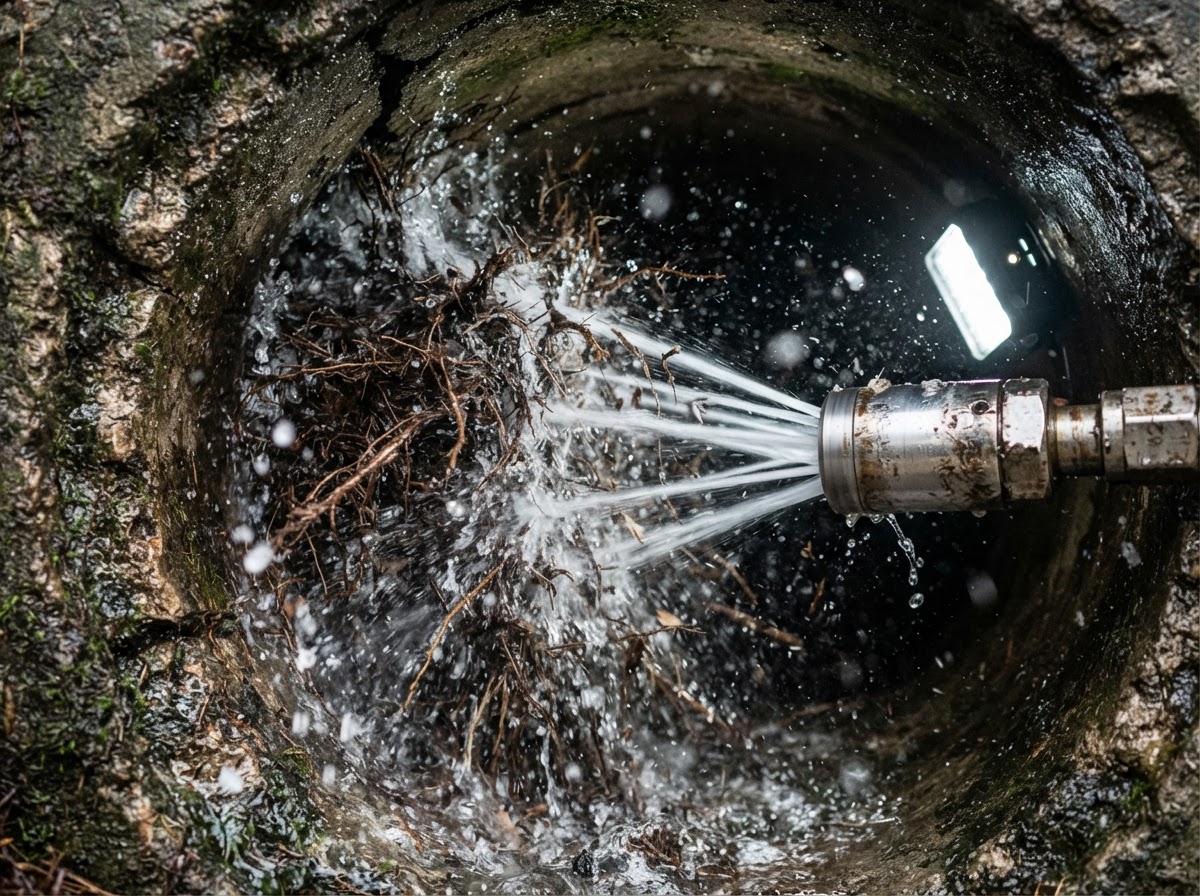
Johnston Station grew up around a railroad stop and a sawmill, long before the city existed. Houses here have had more owners and more changes than a plat built in one stretch. A line that old may have been patched or rerouted, and the current owner may not have records.
Match the observed plumbing problem to the service, then confirm the method against the actual line.
Discuss buildup from kitchen use in Johnston Station. The inspection determines whether cleaning fits the pipe.
Learn more →Ask what an inspection shows about roots in Johnston Station. The inspection determines whether cleaning fits the pipe.
Learn more →Explain how often the blockage returns in Johnston Station. The inspection determines whether cleaning fits the pipe.
Learn more →Assess deposits that narrow the line in Johnston Station. The inspection determines whether cleaning fits the pipe.
Learn more →Plan upkeep around known findings in Johnston Station. The inspection determines whether cleaning fits the pipe.
Learn more →Because the city annexed this area in 1970, older work may sit in county or earlier records rather than in a single city file. When you ask a professional about the line, bring whatever past invoices or notes you have.
Ask where the cleanout is, what the pipe is made of and whether an inspection shows a defect. In the older area, the first question is usually the condition of the line, not only the blockage.
Prepare the information about the property before choosing a cleaning method. This sequence keeps the request tied to the actual line rather than a neighborhood-wide assumption.
Give the Johnston Station address, affected fixtures, timing and earlier cleaning history. Mention whether wastewater has backed up.
Note where the cleanout is and who can approve work, whether an owner, an association or a manager.
Ask what the inspection can establish, whether the pipe material is suitable and whether cleaning or a repair assessment fits.
The professional selects equipment for the actual line and obstruction. Access and downstream conditions shape how the work proceeds.
Keep the findings for this Johnston Station property. Ask about unresolved defects and what a change in symptoms would mean.
The map is an unpinned area view for planning around Johnston Station, Johnston. It is not a service boundary, a business location or the location of the affected property.
These pages cover other local planning contexts. They are not confirmation of service availability at an individual address.
The city's history page says the community adopted the name from John F. Johnston, a station agent for the Interurban Railroad.
The city page describes it as where settlement began in 1846, before incorporation in 1969.
Availability has to be confirmed for the address and the work. A request is not a booked appointment or a promise of service.
Describe what is happening at your Johnston property. Include the affected fixtures, how long the problem has lasted, any earlier inspection findings and known access limits.
Tell us about the affected drain, what you have noticed, and whether hydro jetting may suit the line.